
What Is the FDA Q-Submission Program?


Summary:
- The FDA Q-Submission Program provides a structured way for Medical Device developers to communicate with the FDA and obtain feedback before submitting a formal regulatory application.
- The programme includes different types of Q-Submission requests, each designed to address specific scientific, technical, or regulatory questions during product development and FDA review.
- Sponsors can use the Q-Submission Program at different stages of device development to discuss study designs, testing strategies, and regulatory requirements before submission.
- A complete Q-Submission includes the required information, submission, FDA review, and feedback.
- Using the FDA Q-Submission Program helps sponsors improve submission quality, identify potential regulatory issues early, and better prepare for a successful Medical Device application.
Short Description
The FDA Q-Submission Program is a voluntary process that allows Medical Device developers to communicate with the United States Food and Drug Administration before submitting a formal regulatory application. It helps sponsors obtain feedback on study plans, testing strategies, and regulatory questions during product development. By using the Q-Sub Program, sponsors can better understand FDA expectations, improve the quality of future submissions, reduce any kind of delays, and prepare stronger regulatory applications for Medical Devices.
Understanding the FDA Q-Submission Program
The FDA Q-Submission Program is a voluntary programme that allows Medical Device developers to communicate with the United States Food and Drug Administration (FDA) before submitting a formal regulatory application. It provides a structured way to request FDA feedback, ask regulatory questions, and discuss important aspects of a Medical Device during its development.1
The programme was introduced to help sponsors receive FDA feedback before preparing a premarket submission. Through the Q-Sub Program, developers can discuss study plans, testing strategies, and regulatory requirements with FDA. This helps them to understand the FDA expectations, improve submission quality, and address potential issues before submitting a Medical Device application.2
Types of Requests Under the FDA Q-Submission Program
The FDA Q-Submission Program includes several request types that enable Medical Device developers to communicate with the FDA at different stages of product development and regulatory review. Each request type has a specific purpose and helps sponsors obtain feedback or discuss regulatory matters before or during a Medical Device submission.2
| Q-Submission Type | Primary Purpose |
| FDA Pre-Submission (Pre-Sub) | Request FDA feedback on planned Investigational Device Exemption applications, study protocols, or future Medical Device submissions before formal submission. |
| Study Risk Determination | Request FDA to determine whether a planned Medical Device clinical study is significant risk, non-significant risk, or exempt from Investigational Device Exemption regulations. |
| Informational Meeting | Share information with FDA without requesting formal written feedback. |
| Submission Issue Request (SIR) | Resolve issues identified during FDA review of an existing submission.2 |
| Formal Early Collaboration Meetings (Agreement Meetings and Determination Meetings) | Facilitate formal discussions with FDA on specific regulatory matters established under the Federal Food, Drug, and Cosmetic Act. |
| Day 100 Meeting | Discuss the review progress of a Premarket Approval application during FDA review.2 |
Table 1
When Should You Use the FDA Q-Submission Program?
The Q-Sub Program can be used at different stages of a Medical Device’s product development. Sponsors may request FDA feedback whenever they need scientific, technical, or regulatory input before submitting a formal application.1
The FDA Q-Submission Program should be considered in the following situations:
- Before submitting a premarket application: Sponsors can request FDA feedback before preparing an Investigational Device Exemption application or other future Medical Device submission.3
- When planning non-clinical or clinical studies: FDA feedback can help refine study protocols, testing strategies, and clinical investigation plans before studies begin.1
- When clarification on regulatory requirements is needed: Sponsors may discuss scientific or regulatory questions to better understand FDA expectations during device development.2
- During different stages of product development: Multiple Q-Submission interactions may be used throughout the device life cycle as development progresses and new regulatory questions arise.
How to Prepare an FDA Q-Submission
The Q-Sub Program involves providing complete information and following the FDA’s submission process. A well-prepared submission helps the FDA provide relevant and meaningful feedback before a formal Medical Device application is submitted.1
The important steps for preparing an FDA Q-Submission are:
- Gather the required information: Include contact information, a device description, intended use, regulatory history, the purpose of the submission, and specific questions for FDA feedback.
- Submit the Q-Submission: Submit the request using the appropriate FDA submission process and the required electronic submission format.
- Receive FDA review and feedback: FDA reviews the submission, provides written feedback, and schedules a meeting based on request.
- Use the feedback to prepare the final submission: Apply FDA recommendations to refine study plans, testing strategies, and regulatory documentation before submitting the final Medical Device application.
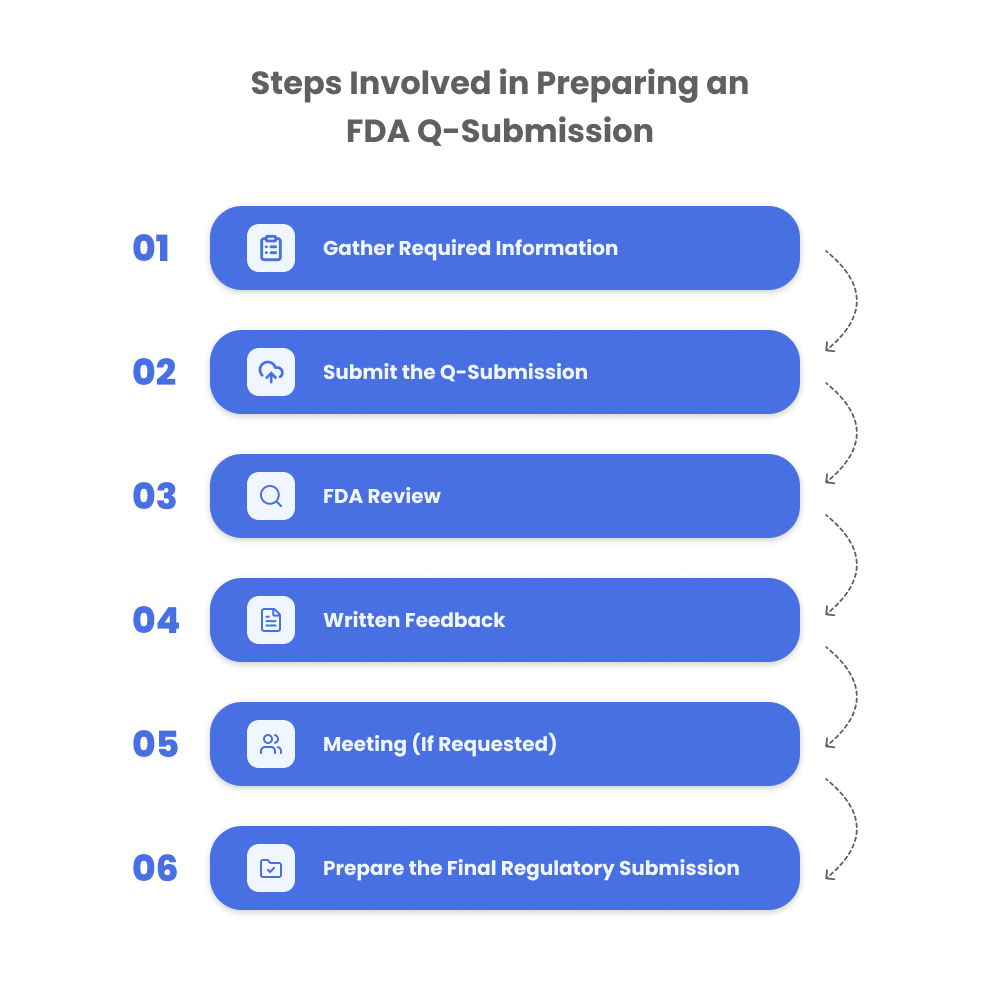
Figure 1
Benefits of the FDA Q-Submission Program
The FDA Q-Submission Program helps sponsors communicate with the FDA before submitting a formal Medical Device application. Early interaction allows potential regulatory issues to be identified and addressed during product development. This can improve the quality of future submissions.3
The main benefits of the FDA Q-Submission Program are:
- Early FDA feedback: Sponsors can obtain FDA input on study designs, testing strategies, and regulatory questions before preparing a formal submission.
- Improved submission quality: FDA feedback helps the sponsors to prepare more complete submissions that address regulatory expectations in a better way.
- Identification of potential issues: By discussing any concerns early, it allows the sponsors to resolve scientific or regulatory challenges before submission.3
- Better planning for product development: FDA recommendations help the sponsors to plan clinical studies and non-clinical testing more effectively.1
Conclusion
The FDA Pre-Submission is an important regulatory pathway that allows Medical Device developers to communicate with the FDA before submitting a formal application. It provides an opportunity to obtain feedback on study plans, testing strategies, and regulatory requirements during product development. Through the Q-Sub Program, sponsors can improve the quality of their submissions, address potential regulatory issues early, and better prepare for a successful Medical Device submission to the FDA.
References
1. U.S. Food and Drug Administration. Requests for Feedback and Meetings for Medical Device Submissions: The Q-Submission Program; Guidance for Industry and Food and Drug Administration Staff. U.S. Food and Drug Administration; 2025. https://www.fda.gov/media/114034/download
2. Piermatteo K. The Pre-Submission Program and Meetings with FDA Staff. U.S. Food and Drug Administration; 2016. Accessed July 8, 2026. https://www.fda.gov/media/93744/download
3. Q-Submission (Pre-IDE) Meetings | Office of Ethics and Compliance. Accessed July 8, 2026. https://compliance.ucsf.edu/q-submission-pre-ide-meetings

Recent Posts
QSR Compliance for Medical Device Manufacturers: FDA Quality System Regulation Explained
QSR compliance FDA helps Medical Device manufacturers meet FDA quality requirements under the Quality Management System Regulation and 21 CFR Part 820. The requirements include ISO 13485:2016, manufac..
eCTD Publishing for FDA Drug Submissions: What Sponsors Need to Know
eCTD Publishing FDA helps sponsors organise regulatory information, prepare FDA submissions, follow submission standards, check electronic files for errors, and send complete submission packages throu..
EU MDR vs IVDR: Key Differences and Compliance Timelines
The European Union Medical Device Regulation and In Vitro Diagnostic Medical Device Regulation set different requirements for Medical Devices and diagnostic devices, covering their scope, classificati..
Contact us
Please feel free to talk to us if you have any questions. We endeavour to answer within 24 hours.